

Texas winters have a way of catching people off guard. The state built its infrastructure around heat, not cold, and when temperatures drop hard and fast, the consequences show up quickly — frozen pipes, power failures, and water damage that takes months to fix. The 2021 Winter Storm Uri left millions of Texans without electricity for days, with insured losses estimated in the tens of billions (Insurance Council of Texas, 2021). ERCOT’s post-event report identified weatherization gaps that left generation equipment vulnerable to sustained below-freezing temperatures — and subsequent winters have shown these events are not once-in-a-generation. Pipes in Texas homes are often routed through uninsulated attics, exterior walls, and crawl spaces never designed for sustained cold. When power cuts out and heating stops, those pipes are fully exposed. Most of these failures are preventable with the right electrical upgrades installed before winter arrives.
What Happens to Your Home When the Grid Goes Down
ERCOT’s post-event report on Winter Storm Uri identified cascading failures — including generation equipment not weatherized for sustained cold — as the primary driver of the rotating outages that disabled home heating across the state. When indoor temperatures fall rapidly with no backup heat source, unprotected pipes in attics and exterior walls can reach freezing point within hours.
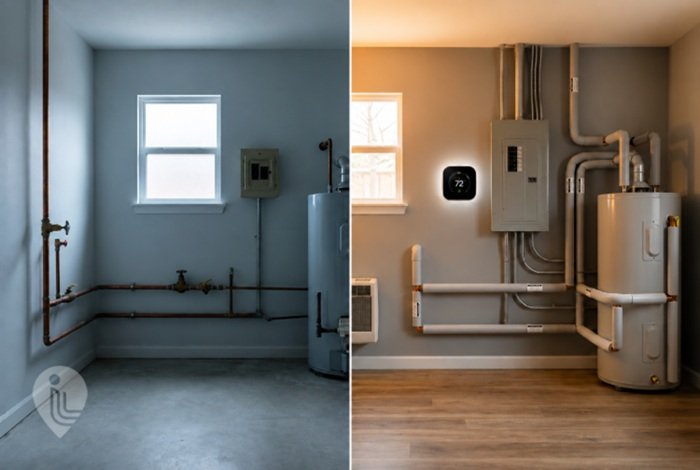
| Risk Factor | Without Electrical Upgrades | With Electrical Upgrades |
| Pipe freeze risk during outage | High | Low |
| Response time to temperature drop | Manual / delayed | Automatic |
| Damage cost after burst pipe | $5,000–$70,000+ | Often significantly reduced |
| Dependency on grid stability | Full | Reduced |
| Monitoring during evacuation | None | Remote alerts |
This guide covers five practical electrical upgrades that reduce the risk of pipe bursts when winter hits hard — sensible investments for anyone who has lived through a Texas winter storm and does not want to repeat it.
Pipe Heat Cable Wiring for Freeze-Prone Plumbing
Self-regulating heat cable installed along vulnerable pipe runs is one of the most direct defenses against a freeze-related pipe burst. These systems run a low-wattage current through a heating element that keeps pipe surfaces above freezing even when surrounding air drops well below 32°F — most effective in attics, garages, exterior walls, and under-sink areas near outside-facing cabinets. Self-regulating cables adjust heat output based on ambient temperature and connect to a dedicated 120V circuit. Some models include a separate thermostat or controller; others are self-contained. If power is available during rotating outages, a properly installed cable buys critical time — though a sustained complete outage will eventually overcome any cable system, which is why backup power matters. All heat cable must be UL-listed and installed by a licensed Texas electrician.
- Adjust heat output automatically without a separate thermostat
- Ideal for attic pipe runs, crawl spaces, and garage plumbing
- Require a dedicated 120V circuit installed by a licensed electrician
- Built-in indicator lights confirm the system is active
- Compatible with both copper and PVC pipe
Backup Power Integration to Outlast Grid Failures
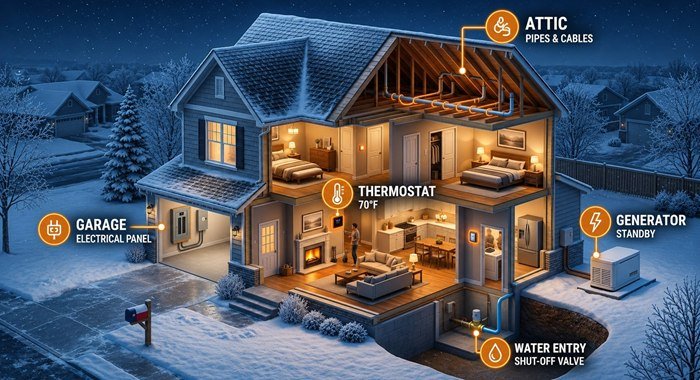
When the grid fails during a hard freeze, your furnace, heat pump, and pipe protection systems all lose power simultaneously. A standby generator with a properly wired transfer switch addresses this directly — heating keeps running, heat cables stay active, and your home maintains enough warmth to protect plumbing through an extended outage. Standby generators on natural gas or propane activate automatically within seconds. For homeowners not ready for a full standby system, a transfer switch paired with a portable generator protects the circuits that matter most: furnace, water heater, and heat cables.
Smart Freeze Detection and Remote Monitoring
A smart thermostat set to alert you when indoor temperatures approach 55°F gives you critical response time before pipes reach dangerous levels — especially valuable when you are away during a cold snap. Dedicated freeze sensors placed near vulnerable pipe locations add a second layer, watching the specific risk zones a central thermostat cannot detect. Tying these into a monitoring hub with battery backup ensures they stay functional during an outage. In an unmonitored home, a burst pipe can run for hours undetected. In a monitored home, you know within minutes and can shut off water remotely.
Electrical Panel Upgrades for Cold-Weather Load
Most Texas homes were not wired with extreme cold in mind. When a freeze hits and homeowners simultaneously run space heaters, heat cables, and an overtaxed HVAC system, older 100-amp panels trip repeatedly — and overloaded circuits can become a fire hazard. Upgrading to a 200-amp panel handles cold-weather peak load, supports generator integration, and keeps dedicated freeze-protection circuits on their own breakers — so a tripped breaker at 2 a.m. does not take your pipe protection offline.
Automatic Water Shut-Off Valves with Electrical Integration
The damage from a pipe burst is caused by the water that flows freely after the pipe cracks. An automatic shut-off valve wired to leak sensors can stop that flow within seconds — before water reaches ceilings, walls, or flooring. Sensors mount at high-risk locations: under sinks, near water heaters, in attics, and at washing machine connections. When moisture is detected, the motorized valve at the main supply line closes immediately. Remote override through a smartphone app lets you shut off water the moment you receive a freeze alert. Given that burst pipe claims in Texas regularly run into five figures, this is among the highest-return investments before winter.
Before You Upgrade Your Electrical System: Quick Checks and Hiring Tips
A few low-cost steps reduce risk right now — especially in DFW and Houston slab-on-grade homes where attic plumbing has almost no cold buffer, and in pier-and-beam homes common in Austin and East Texas where underfloor lines are exposed to outside air. When ready to hire, confirm the electrician is licensed in Texas (verify at TDLR), will pull the required permit, performs a load calculation before sizing any panel or generator, and uses UL-listed heat cable.
- Wrap exposed attic, garage, and exterior-wall pipes in foam insulation before the first freeze
- Open cabinet doors under exterior-wall sinks on hard freeze nights; locate and test your main water shut-off now
- If traveling during a cold snap, shut off the main supply and drain exposed lines — heat loss in an unoccupied home is faster than most expect
- Under $300: freeze sensors and smart thermostat alerts — fastest wins, lowest barrier
- $300–$1,500: automatic shut-off valve plus heat cable on attic and garage runs
- $2,000+: panel upgrade or standby generator with transfer switch — requires permit and load calculation
Note: This article is for informational purposes only and is not a substitute for professional evaluation. Costs vary by home size, panel age, permit fees, and local labor rates. Some links may be affiliate links; this does not affect our editorial recommendations.
Conclusion
A hard freeze does not have to end in a pipe burst, and a pipe burst does not have to mean a ruined home. Heat cables, backup power, smart monitoring, panel upgrades, and automatic shut-off valves each address a specific link in the failure chain that turns a cold snap into a costly disaster — and none require a full renovation. As ERCOT continues working on grid-level improvements, the most reliable protection for your home is still the one you install yourself.