Generator vs. Battery: Texas Backup Power Cost Guide
Iinjast··6 min read
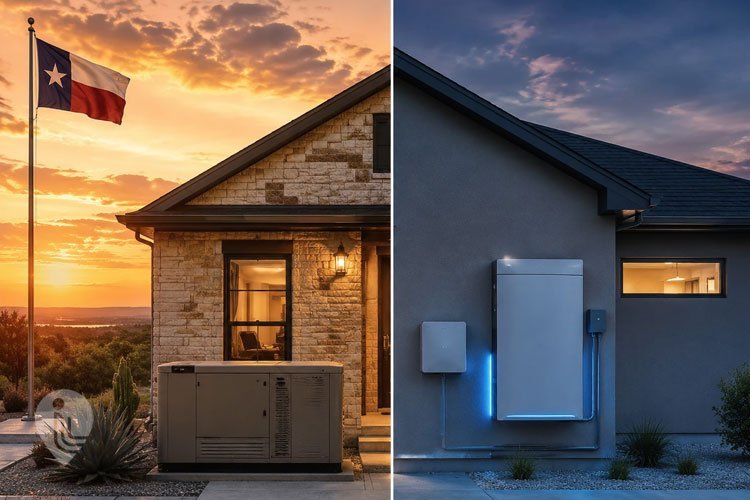
In Central Texas, the cost gap between a portable generator and a whole-home battery can reach thousands or even tens of thousands of dollars, but the sticker price is only the starting point. A portable generator usually offers a lower entry cost, but it brings fuel storage, manual setup, maintenance, noise, safety, and load-management concerns during a Texas outage. A whole-home battery can provide faster, cleaner backup power, but it requires a much larger upfront investment, inverter capacity, permitting, and proper integration with the home’s electrical panel. In this guide, ilocality reviews the real cost factors homeowners should compare, including installation, fuel or recharge logistics, AC startup demand, runtime, maintenance, and when to involve an electrician, solar contractor, or backup power specialist before buying equipment.
Upfront Power Equipment Costs: The Real Price of Entry
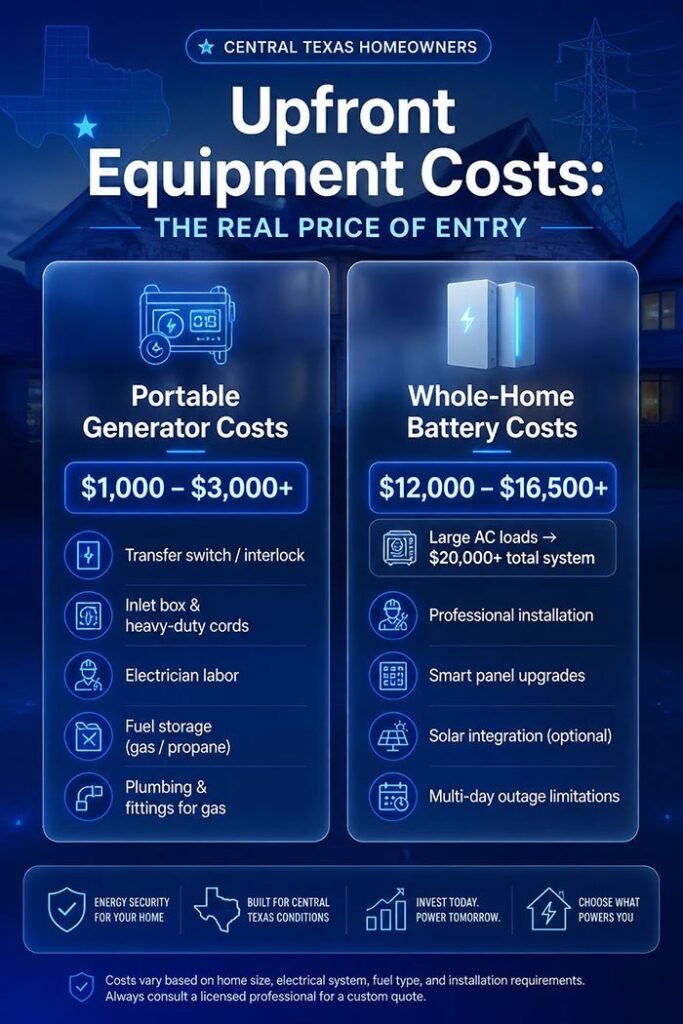
For Central Texas homeowners, the upfront cost comparison starts with a large gap, but the numbers need to be read carefully. A capable dual-fuel portable generator may cost roughly $1,000 to $3,000 or more for the unit itself, depending on wattage, brand, and fuel type. That price does not include the safe connection setup, such as a transfer switch or interlock, inlet box, heavy-duty cords, electrician labor, or added fuel infrastructure. If the homeowner wants to rely on propane storage or a natural gas connection, plumbing work, fittings, and fuel setup can add hundreds or even more to the real entry cost.
The Real Price of Entry
A single professionally installed whole-home battery system, such as a common 13.5 kWh unit, often lands closer to the $12,000 to $16,500 range before incentives, depending on equipment and installation complexity. If the goal is to support larger Texas AC loads, multiple batteries, smart panel upgrades, solar integration, or a more advanced backup-load design can push the total cost beyond $20,000. A stand-alone battery without solar can still provide clean backup power, but during a multi-day outage it behaves more like a large reserve tank than a renewable power source: once the stored energy is depleted, recharge options become limited. Hidden costs like generator fuel infrastructure or solar integration for longer battery runtime can significantly change the real return on investment.
Estimated Backup Power Cost Items for Central Texas Homeowners
The ranges below are planning estimates for Central Texas homeowners. Actual costs can vary based on equipment size, electrical panel condition, permitting, utility requirements, fuel setup, HOA rules, and whether the system must support central AC during extended outages.
Cost Item
Typical Budget Range
Applies To
Why It Matters
Dual-fuel portable generator
$1,000–$3,000+
Portable generator
This is usually the lowest entry-cost option, but the unit price alone does not include safe home connection, fuel setup, or electrician work.
Heavy-duty generator cords and inlet box
$200–$700+
Portable generator
Needed for a safer connection point between the generator and selected home circuits.
Manual transfer switch or interlock setup
$900–$1,600+ installed
Portable generator
This prevents unsafe backfeeding and allows selected circuits to be powered more safely during an outage.
Electrician labor for portable-generator setup
$500–$2,000+
Portable generator
Labor varies based on panel location, circuit selection, permitting, distance to inlet, and whether panel upgrades are needed.
Propane storage or natural gas connection
$300–$1,500+
Portable generator
Fuel infrastructure can change the real cost. A natural gas connection may require plumbing work, fittings, pressure checks, or permits.
Single whole-home battery system, around 13.5 kWh
$12,000–$16,500+ installed before incentives
Whole-home battery
This usually includes the battery, inverter/backup controls, basic integration, and professional installation, depending on system design.
Additional battery capacity
$8,000–$14,000+ per added battery
Whole-home battery
Often needed if the homeowner wants longer runtime or better support for larger Texas AC loads.
Smart panel or backup-load panel
$2,000–$6,000+
Battery or generator
Helps prioritize critical circuits such as AC, refrigeration, internet, lighting, and medical devices instead of trying to power everything.
Solar integration for battery recharge
Varies widely; often $10,000–$25,000+ if solar is not already installed
Whole-home battery
A battery without solar can run out during a multi-day outage. Solar integration can improve recharge potential, but it adds major project cost.
Permits and inspections
$200–$1,000+
Battery or generator
Costs vary by city, utility, scope, HOA rules, and whether electrical, gas, or solar work is involved.
Usually low annual maintenance, but capacity declines over time
Whole-home battery
Batteries avoid engine maintenance, but homeowners should account for warranty terms, usable capacity, and long-term degradation.
Installation and Electrical Integration: Manual Backup vs. Automatic Switching
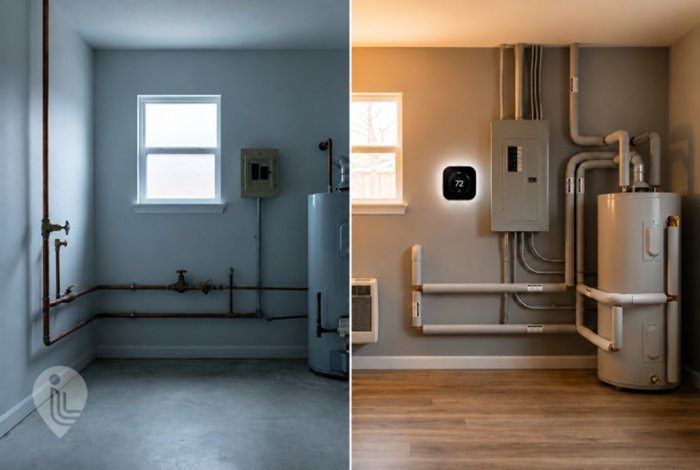
Timeline is another hidden cost. A basic portable-generator connection may be completed relatively quickly when the electrical panel is straightforward and the contractor is available. A whole-home battery project can take longer because it may involve permitting, utility coordination, equipment availability, inspection scheduling, smart-panel configuration, or solar integration. For Central Texas homeowners preparing for storm season or peak summer heat, the question is not only how much the system costs, but how long it will take before the backup plan is actually ready to operate.
Conclusion
The right backup power choice depends less on which system looks better in a brochure and more on how the home will actually be used during a Central Texas outage. A portable generator can make sense for a budget-ready homeowner who is comfortable with manual setup, fuel management, routine maintenance, and careful load control. It offers a lower entry cost, but the trade-off is involvement: someone has to store fuel safely, test the equipment, connect the system properly, and manage what stays on during the outage.
A whole-home battery is better suited for homeowners who value automation, quiet operation, cleaner backup power, and less hands-on management. The trade-off is cost. Batteries require a larger upfront investment, careful electrical integration, realistic runtime planning, and sometimes solar or additional battery capacity to make sense during longer Texas outages. For some homes, the strongest strategy may be hybrid: battery storage for fast response and sensitive electronics, with generator support, solar recharge, or managed critical-load design for longer events.
Before choosing either option, Central Texas homeowners should start with a professional load audit. An electrician, solar contractor, or backup power specialist can review the home’s electrical panel, AC startup demand, critical circuits, fuel or recharge plan, installation requirements, and permitting constraints. That review helps turn a backup power purchase into a system that is sized for the way the home actually needs to operate when the grid goes down.